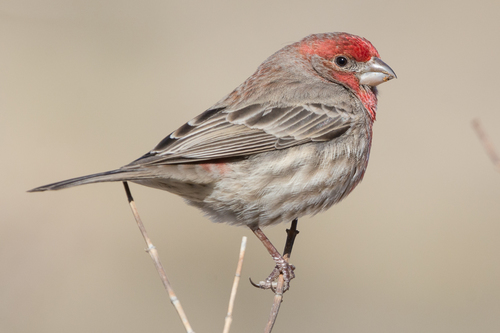
That cheerful little bird singing a long, twisty warble from your gutter or feeder is a House Finch (Haemorhous mexicanus). The male wears a wash of rosy red across his head and chest that looks like he dipped his face in raspberry juice.
What it looks like
Adults are about 14cm long with a chunky, curved seed-cracking beak. Males have red to orange-red on the forehead, throat, and rump, with brown streaks down the belly and flanks. Females are plain brown all over with blurry gray-brown streaks and no red at all. Both have a fairly flat-headed look and a slightly notched tail.
When and where
- Season: Year round across the region.
- Habitat: Backyards, city parks, building ledges, and shrubby edges. They thrive right alongside people.
- Best time: Morning at a feeder stocked with sunflower or nyjer seed.
Red from their food
The red color in a male house finch is not built in. It comes from pigments called carotenoids in the berries and seeds he eats while growing his feathers. A male that eats well shows bright red, while one with a poorer diet turns more orange or even yellow. Females actually prefer the reddest males, so his color is a billboard advertising what a good forager he is.
Spot one this weekend
House finches are Common in nearly every neighborhood. Hang a tube feeder with black-oil sunflower seed and watch for small brown birds that arrive in chatty little groups. Listen for the long bubbly song, often ending in a buzzy downward note, coming from a rooftop or wire.