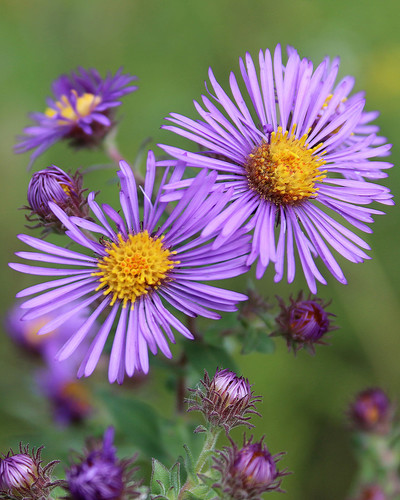
When most summer flowers have gone to seed, a tall plant topped with clusters of purple stars lights up the roadside. This is the New England Aster (Symphyotrichum novae-angliae), one of the showiest late bloomers in the east.
What it looks like
The plant grows waist high or taller, often over 1m, on sturdy hairy stems. Each flower is about 3 to 4cm across with 40 or more narrow petals, usually deep purple but sometimes pink, ringing a bright golden center. The leaves are long, narrow, and rough to the touch, and they clasp the stem without a stalk. A single healthy plant can carry dozens of blooms at once.
When and where
- Season: Late summer into fall
- Habitat: Meadows, roadsides, moist field edges
- Best time: Sunny afternoons when pollinators are active
A late feast for pollinators
By blooming late, the New England Aster becomes a key food source when little else is flowering. Bees, butterflies, and migrating monarchs crowd its golden centers to fuel up before the cold. The flowers close at night and on gray days, then open wide in the sun. After frost the seeds carry tiny parachutes of hair that drift off on the wind.
Spot one this weekend
The New England Aster is Common. Check sunny field edges and roadsides in late summer for tall clumps of purple daisies. Stand quietly by a patch and you will likely see bees and butterflies working the golden centers.