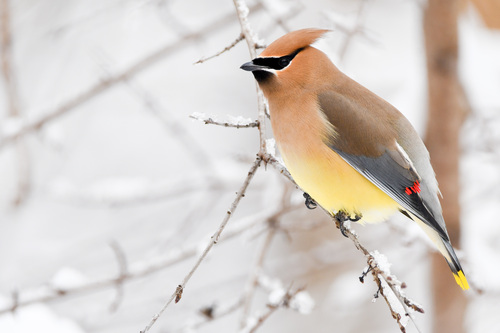
If a flock of smooth tan birds descends on a berry bush and quietly strips it clean, you are watching Cedar Waxwings (Bombycilla cedrorum). Each one wears a black bandit mask and looks like it was polished by hand.
What it looks like
Adults are about 17cm long with a soft, silky plumage that shades from warm brown on the head to gray on the wings and tail. A pointed crest tips back from the crown, and a thin black mask runs across the eyes. The tail ends in a bright yellow band, and the wingtips carry small red drops that look like sealing wax. Everything about the bird looks neat and rounded.
When and where
- Season: Year round, but most visible in late summer and fall when berries ripen.
- Habitat: Hedgerows, park edges, and any tree loaded with small fruit.
- Best time: Midday when a flock settles into a fruiting shrub.
Passing the berry down the line
Cedar Waxwings are famously polite eaters. Birds perched in a row will sometimes pass a single berry or flower petal beak to beak down the branch until one of them finally swallows it. They feed so heavily on fruit that a bush of overripe berries can leave a whole flock tipsy for an afternoon. Their soft, high whistle is easy to miss, so the flock often arrives before you notice it.
Spot one this weekend
Cedar Waxwings are Uncommon and travel in tight groups, so you either see many at once or none at all. Watch any shrub heavy with small berries and listen for a thin, wheezy trill overhead. A flash of yellow tail tips confirms you found them.