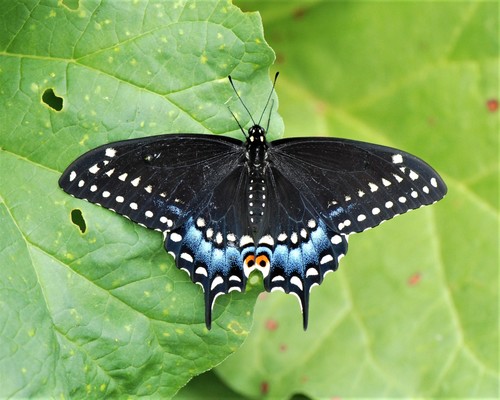
If a large, dark butterfly with a slow, gliding flight drifts across a sunny garden, look closely for the yellow dots along its wings. That is an Eastern Black Swallowtail (Papilio polyxenes), one of the most elegant fliers in the neighborhood.
What it looks like
The wingspan runs about 7 to 9cm. The wings are velvety black with a band of bright yellow spots near the edges, and the hindwings carry a wash of powder blue plus a small orange eyespot. Each hindwing tapers into a slender tail, which is where the swallowtail name comes from. Males show bolder yellow, while females lean more toward the blue. In flight the butterfly looks almost too big to be so graceful.
When and where
- Season: Late spring through early fall, in two or three broods.
- Habitat: Herb gardens, meadows, roadsides, and sunny park borders.
- Best time: Warm, calm afternoons near flowers.
Raised on the herb shelf
The caterpillars have a surprising taste. They feed on parsley, dill, fennel, and carrot tops, so many people first meet this butterfly as a green and black striped caterpillar munching the garden herbs. When threatened, the caterpillar pops out a bright orange forked gland behind its head that gives off a sharp smell to warn off birds. Leaving a few parsley plants unpicked is often all it takes to host a whole new generation.
Spot one this weekend
Eastern Black Swallowtails are Uncommon but reliable near herb beds and flowery paths. Watch for a big black butterfly gliding low, then look for the blue and orange marks on the hindwing. Check any parsley or dill nearby for striped caterpillars.