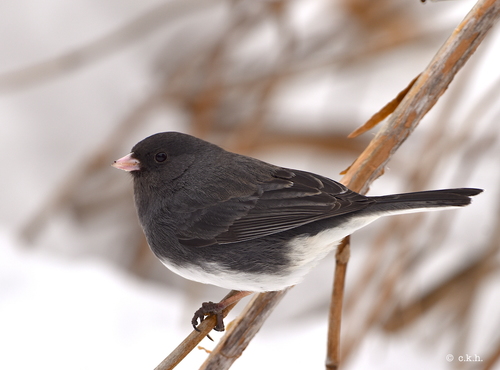
As the weather turns cold, a small gray and white bird often appears under feeders and along trail edges. This is the Dark-eyed Junco (Junco hyemalis), sometimes called a snowbird because it shows up with the first cold snaps.
What it looks like
Juncos are about 15cm long with a neat rounded shape. The common eastern form has a dark slate gray head, back, and chest that ends in a crisp line against a white belly. The bill is small and pale pink. When the bird flushes, it fans white outer tail feathers that flash like signal flags. Females and young birds are a browner gray but share the same white belly and tail flash.
When and where
- Season: Fall through early spring in most of the east
- Habitat: Woodland edges, backyards, park shrubs
- Best time: Morning near feeders or bare ground
Ground feeders in flocks
Juncos spend most of their time on the ground, hopping and scratching through leaf litter for fallen seeds. They often feed in loose flocks and use soft smacking calls to stay in touch. In summer many move north or up into cooler mountain forests to nest, then return to lower ground when snow arrives. Their sudden appearance is a classic sign of changing seasons.
Spot one this weekend
The Dark-eyed Junco is Common. Look on the ground below shrubs and feeders for a small gray bird with a white belly. When it flies up, watch for the white tail feathers flashing on each side.