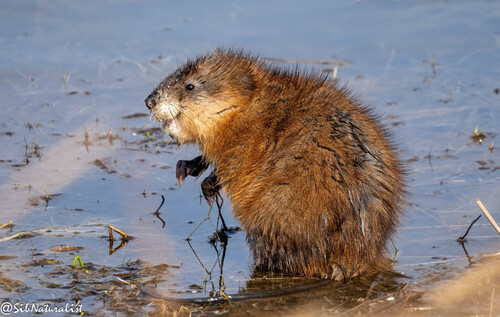
A small brown animal swimming steadily across a pond, leaving a gentle V-shaped ripple, is often a Muskrat (Ondatra zibethicus). Despite the name it is a rodent, not a house rat, and it is right at home in water.
What it looks like
A muskrat is about 25 to 35cm long in the body with a nearly equal skinny tail that is flattened side to side, not flat like a beaver's. The fur is dense and glossy brown, waterproof enough to keep the animal warm in cold water. The hind feet are partly webbed for paddling, and the small eyes and ears sit high so it can swim with just its head showing. Up close the tail looks scaly and bare.
When and where
- Season: Year round, active even under winter ice
- Habitat: Ponds, marshes, slow rivers, ditches
- Best time: Dawn and dusk near the water's edge
Builders of cattail lodges
Muskrats shape their world by cutting cattails and rushes. In marshes they pile these plants into dome-shaped lodges that rise above the water, with an underwater entrance that keeps predators out. Along firm banks they dig burrows instead. They feed mostly on the roots and stems of water plants, and their trimming helps keep open patches of water in a crowded marsh.
Spot one this weekend
The Muskrat is Common. Sit quietly by a pond or marsh at dawn or dusk and watch for a low brown shape swimming with a trailing ripple. Look for dome lodges of piled plants standing out in the shallows.