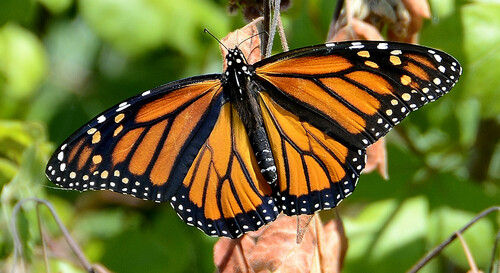
If a big orange butterfly with bold black veins drifts slowly across a meadow, you may be watching a Monarch Butterfly (Danaus plexippus). Behind that familiar orange is one of the greatest journeys in the insect world.
What it looks like
Monarchs have a wingspan of about 10cm, with deep orange wings crossed by heavy black veins and edged in black dotted with white spots. Males have a small black scent spot on each hind wing that females lack. The bright coloring is a warning, since the caterpillars feed on milkweed and store its toxins, making the adults taste foul to birds.
When and where
- Season: Spring through fall, with the great southward flight in September and October.
- Habitat: Meadows, gardens, roadsides, and anywhere milkweed grows.
- Best time: Late summer and early fall, during the migration.
A journey across generations
The monarchs that fly south each fall have never seen their destination. It takes several generations to travel north over the summer, so the butterflies making the long trip back to the fir forests of central Mexico are the great-grandchildren of the ones that left. Somehow they find the very same groves year after year, guided by the sun and an inner sense of direction that scientists are still working to understand.
Spot one this weekend
Monarchs are Uncommon and their numbers have dropped in recent years. Search sunny patches of milkweed and fall wildflowers, especially during the autumn migration. A slow, gliding orange butterfly with black veins near milkweed is your best clue.