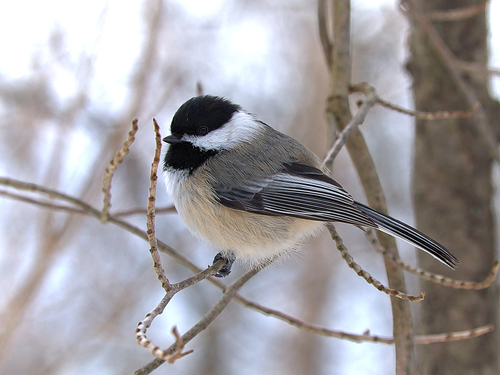
If a tiny round bird with a black cap flits up close and buzzes "chickadee-dee-dee," you have met a Black-capped Chickadee (Poecile atricapillus). It is one of the boldest small birds in the woods and will often come within arm's reach.
What it looks like
Adults are about 13cm long, smaller than a sparrow and shaped like a fluffy ball. The crown and throat are solid black, framing bright white cheeks, and the back is soft gray while the sides wash to warm buff. The short bill is tiny and dark. That black cap and bib against the white face is unmistakable once you see it.
When and where
- Season: Year round, even through the coldest northern winters.
- Habitat: Mixed and deciduous woods, wooded suburbs, park trees, and feeders.
- Best time: Winter mornings, when small flocks move through the bare branches.
A call that counts danger
The chickadee's namesake call is a real alarm system. When a predator is near, the bird adds more "dee" notes to the end, and a higher number of dees signals a more dangerous threat. Other birds nearby listen in and react to the warning. In winter, chickadees also stash seeds in bark crevices and can remember thousands of hiding spots, growing new brain cells each fall to help.
Spot one this weekend
Black-capped chickadees are Common in almost any wooded patch with feeders nearby. Listen for the clear "chickadee-dee-dee" and hold still, since a curious one may hop close to check you out. A handful of sunflower seeds on an open palm sometimes brings one right in.