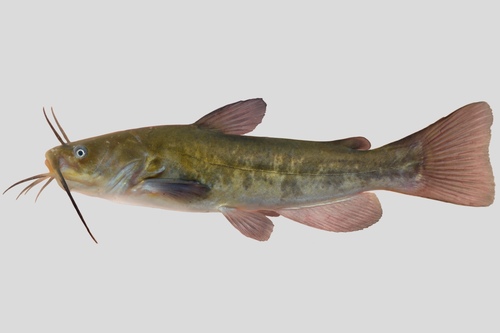
If a child reels in a smooth, scaleless fish with long whiskers from a muddy pond, congratulate them: they caught a Brown Bullhead (Ameiurus nebulosus). Those eight fleshy whiskers, called barbels, make it look like a tiny, grumpy catfish.
What it looks like
Usually 20 to 35 cm long. The body is stout and scaleless, colored mottled brown to olive on top fading to a yellowish or cream belly. The head is broad and flat with eight whisker-like barbels around the mouth, four under the chin and others near the nose. There is a small fleshy fin called an adipose fin on the back. The chin barbels are dark, which helps separate it from similar bullheads.
When and where
- Season: Active spring through fall, feeding most in warm water.
- Habitat: Muddy ponds, slow rivers, lakes, and weedy backwaters, often where oxygen is low.
- Best time: Evening and night, when they cruise the bottom searching for food.
Whiskers that taste
The barbels are covered in taste buds, and so is much of the bullhead's skin, so the whole fish works like a swimming tongue. This lets it hunt in dark, muddy water where eyes are useless, finding insects, worms, and bits of plant by taste and touch alone. Bullheads also tolerate warm, low-oxygen water that would kill most fish, which is why they thrive in ponds others avoid. Handle gently: the spines on the side and back fins can prick.
Spot one this weekend
Brown Bullheads are Common. Try a muddy or weedy pond near dusk with a worm fished right on the bottom. Bites are slow and steady rather than sharp, so wait a beat before lifting, and watch those fin spines when you unhook one.