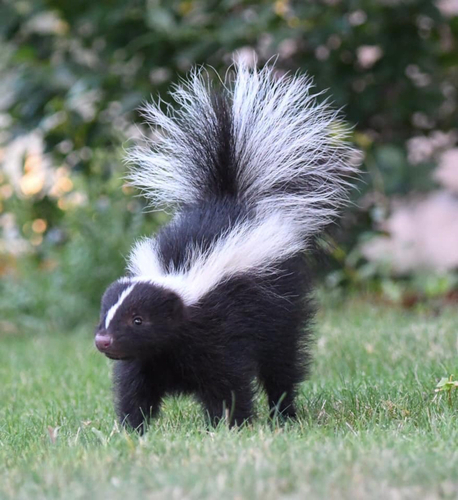
That low, waddling shape crossing a lawn at dusk with two bold white stripes is a Striped Skunk (Mephitis mephitis). The dramatic black-and-white coat is not camouflage at all: it is a billboard telling everyone to keep their distance.
What it looks like
About 30 cm in body length with a bushy tail adding another 20 to 25 cm, roughly house-cat sized but lower and stockier. The fur is glossy black with a thin white stripe up the forehead and two broad white stripes that split at the neck and run down the back. The tail is long and fluffy. The legs are short, giving them a slow, rolling walk.
When and where
- Season: Active year-round but less so in deep winter; most visible spring through fall.
- Habitat: Suburban yards, woodland edges, fields, and parks, often denning under sheds or decks.
- Best time: Dusk and the first hours after dark, when they forage for grubs and insects.
The warning before the spray
Skunks would much rather bluff than spray, because each blast takes days to refill. Before firing, a skunk gives clear warnings: it stamps its front feet, hisses, raises its tail, and may do a little handstand. If you see this, simply back away slowly. The spray, from two glands under the tail, can reach about three meters and is mainly a last resort against a real threat.
Spot one this weekend
Striped Skunks are Uncommon to see well. Watch open lawns and field edges at dusk from a safe distance, and look for small cone-shaped holes in turf where they dug for grubs the night before. Keep dogs leashed and give any skunk plenty of room.