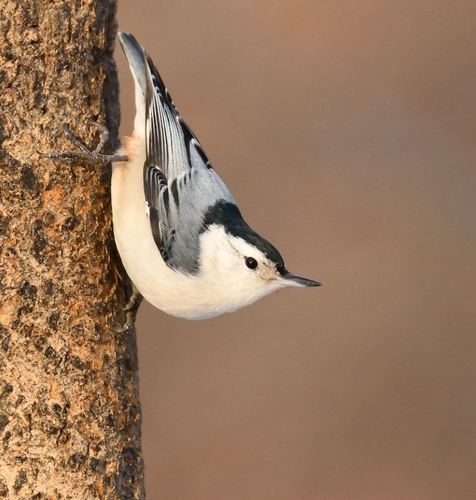
If you spot a small gray bird walking headfirst down a tree trunk like a tiny acrobat, that is a White-breasted Nuthatch (Sitta carolinensis). They are one of the only North American birds that move down trees, and once you notice the habit you cannot unsee it.
What it looks like
About 14 cm long, smaller than a sparrow but stockier. The back and wings are blue-gray, the belly is bright white, and the cap stripe down the nape is glossy black on males, dark gray on females. The tail is short and stubby with a few white patches that flash when they fly. The bill is long, sharp, and slightly upturned, perfect for prying insects from bark crevices.
When and where
- Season: Year-round resident across most of the eastern US and southern Canada.
- Habitat: Mature deciduous woods, suburban yards with oak or maple, neighborhood parks with old trees.
- Best time: Mid-morning, when they visit feeders for sunflower seeds and suet.
Why they walk down
Most tree-climbing birds, like woodpeckers and Brown Creepers, only go up. White-breasted Nuthatches go both ways, with a preference for spiral-walking down. The reason is food. Insects and spider eggs hidden in the upper sides of bark cracks get overlooked by upward climbers but are easy to spot from above. By working from a different angle, nuthatches find what the rest of the forest missed. They also stash seeds in bark for winter and remember the locations weeks later.
Spot one this weekend
White-breasted Nuthatches are Common. Walk under any mature oak or maple, listen for a nasal "yank yank yank" call, then look for movement on the trunk. The bird going down headfirst is your target. A handful of sunflower seeds on a porch railing will often bring one in within an hour during winter.