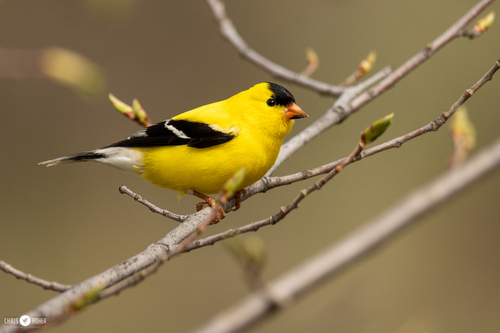
If a flash of lemon yellow bounces past you in a summer meadow with a chirpy "po-ta-to-chip" call, you just met an American Goldfinch (Spinus tristis). They are one of the easiest birds to identify across the eastern and central US, and one of the cheeriest sights of summer.
What it looks like
Adult males in summer are the unmistakable ones: bright canary yellow body, jet black wings with white bars, and a small black cap right above the bill. They are tiny, only about 13 cm long, lighter than two AA batteries. Females are softer olive-yellow with the same black-and-white wing pattern. In winter, both sexes turn dull olive-brown, which surprises a lot of first-time backyard birders.
When and where
- Season: Year-round in the northern US, but most visible from May through September when males are in breeding color.
- Habitat: Open meadows, weedy roadsides, community gardens, backyards with sunflower or nyjer feeders.
- Best time: Mid-morning, when they perch on tall thistle or coneflower stalks.
The latest songbird to nest
American Goldfinches are unusual among songbirds: they wait until July or even August to start nesting, much later than nearly every other species. The reason is thistle. They line their nests with thistle down and feed their chicks almost entirely on thistle and sunflower seeds, so they time everything to the peak of those plants. Their flight pattern is also distinctive, a deep up-and-down bouncing motion paired with a chirp on each rise.
Spot one this weekend
Goldfinches are Common across most US suburbs and rural areas. Walk past any patch of tall yellow or purple wildflowers on a sunny day and listen for that potato-chip call. If you have a yard, hang a nyjer seed sock and you will usually have a small flock within a week.